L
C
©2016–26
LONDON ARTS CLUB
A©2016–26
LONDON ARTS CLUB
ALondon Arts Club is an art platform established in 2016, dedicated to exhibition activity and the development of international art programmes for a network of collectors, cultural professionals and individuals seeking sustained engagement with contemporary practice.
At its core, London Arts Club exists to give artistic talent the career-building visibility it needs. One of the platform's initiatives is Shtager Outdoor, launched in 2025 as a space for experimental projects through exhibitions and other interventions beyond the conventional gallery format.
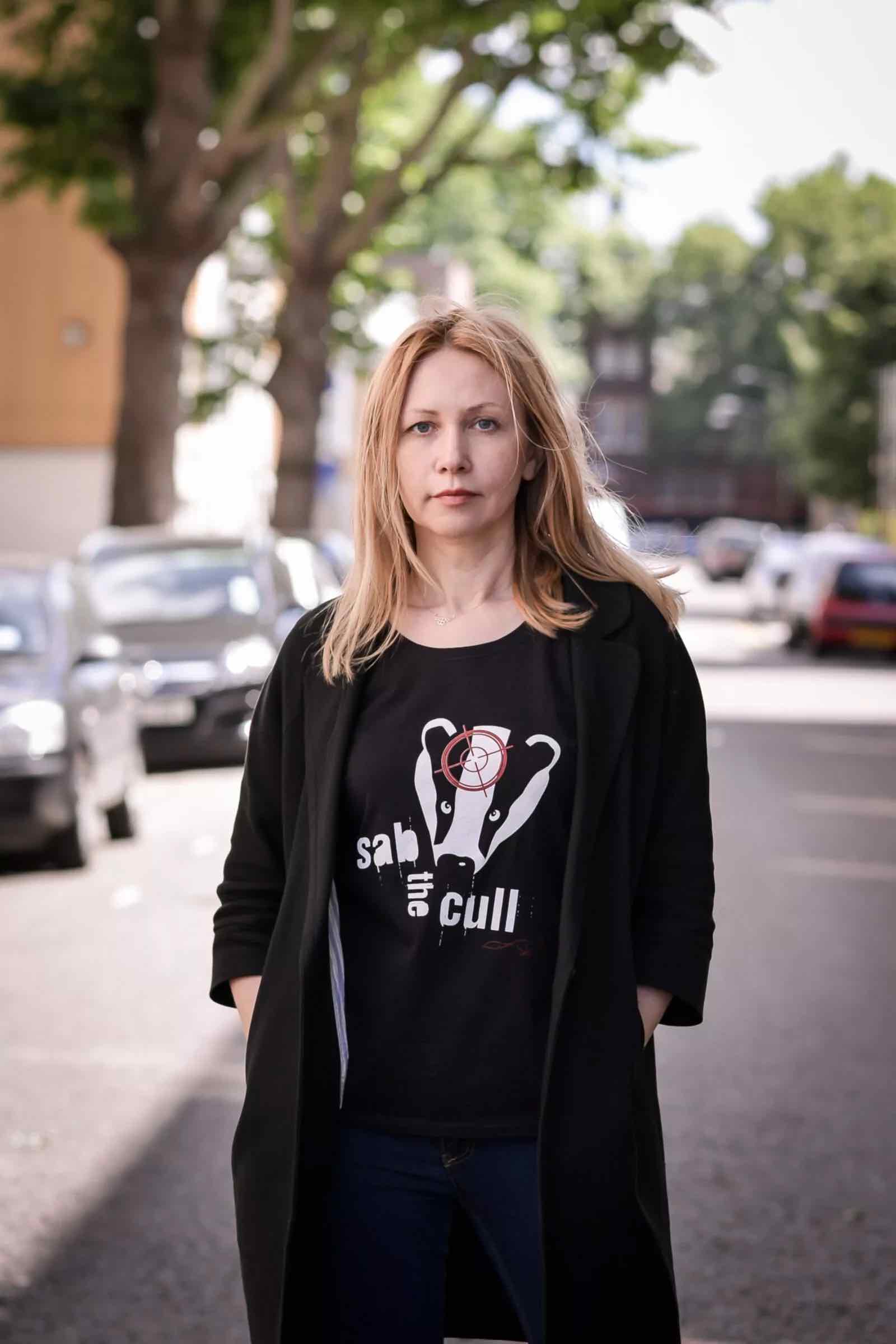
Founder and Director
With an academic background in art history and a specialization in opera, ballet, music, visual arts and costume, Marina has over 15 years of experience in the contemporary art industry. She founded London Arts Club in 2016.
She was a director and co-owner of Shtager Gallery (2016-2024), where she cultivated a standout portfolio of cutting-edge international artists.
From 2025 she runs Shtager OUTDOOR, a project focusing on Public Art.
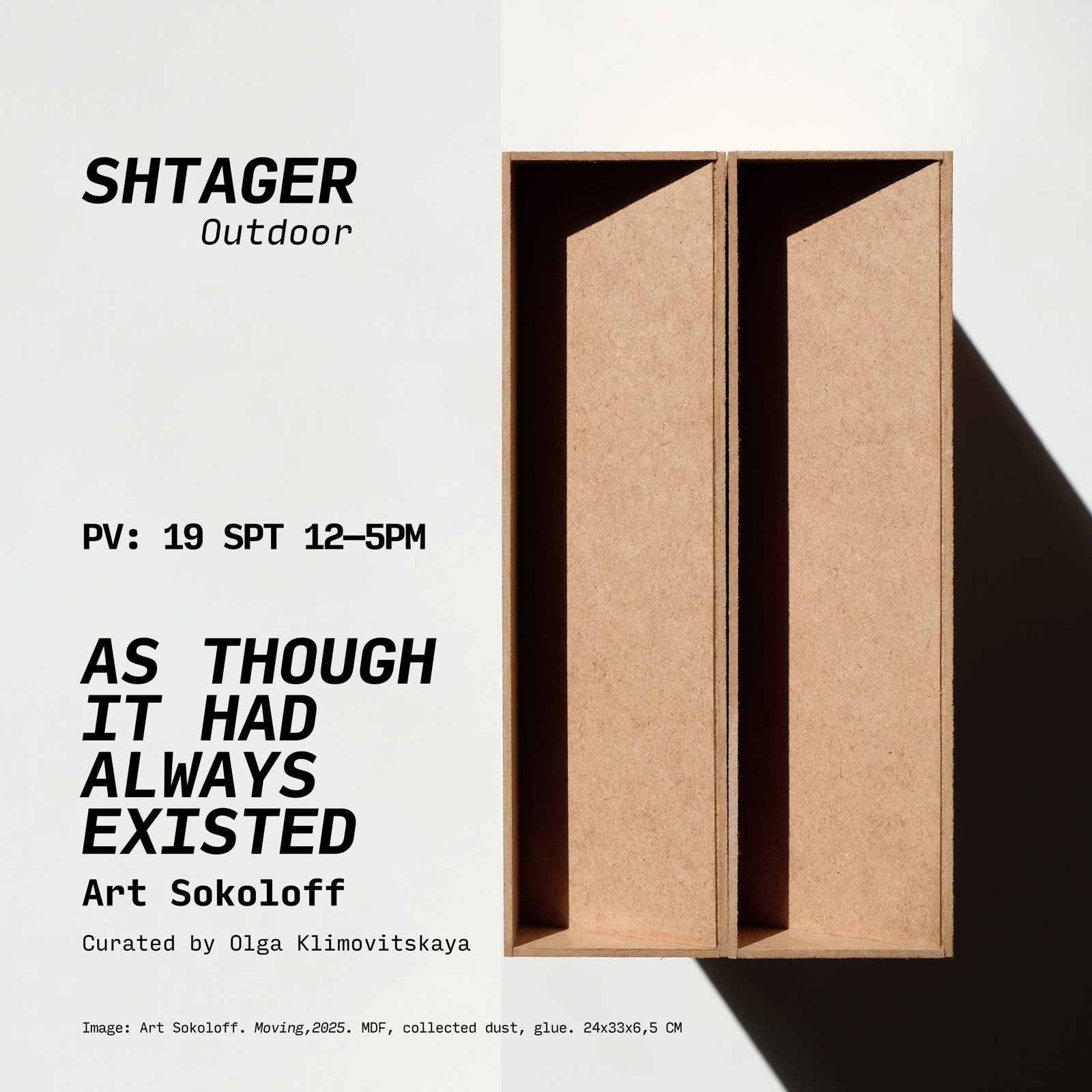
Sep 19 - Oct 17
Curated by Olga Klimovitskaya
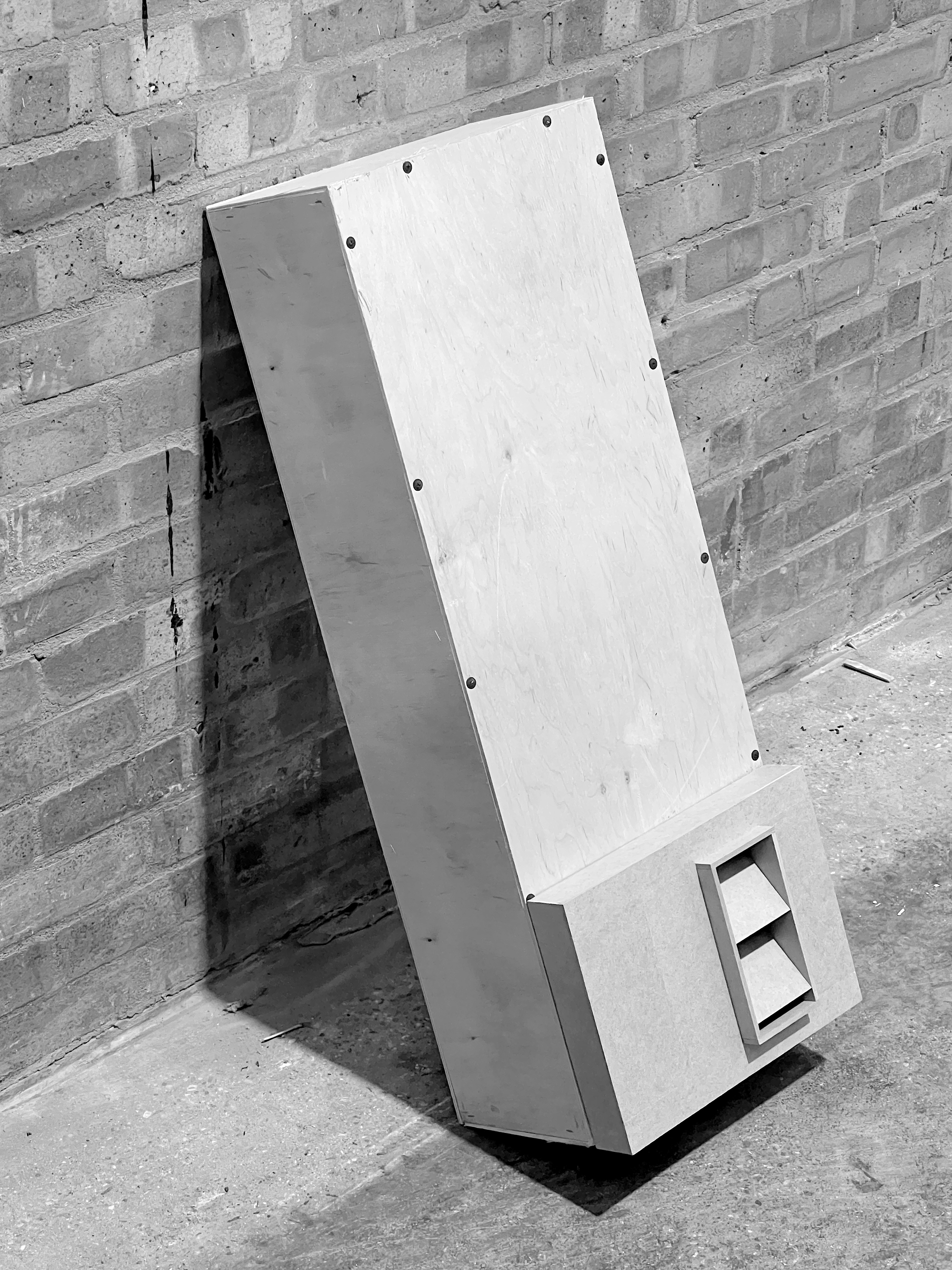
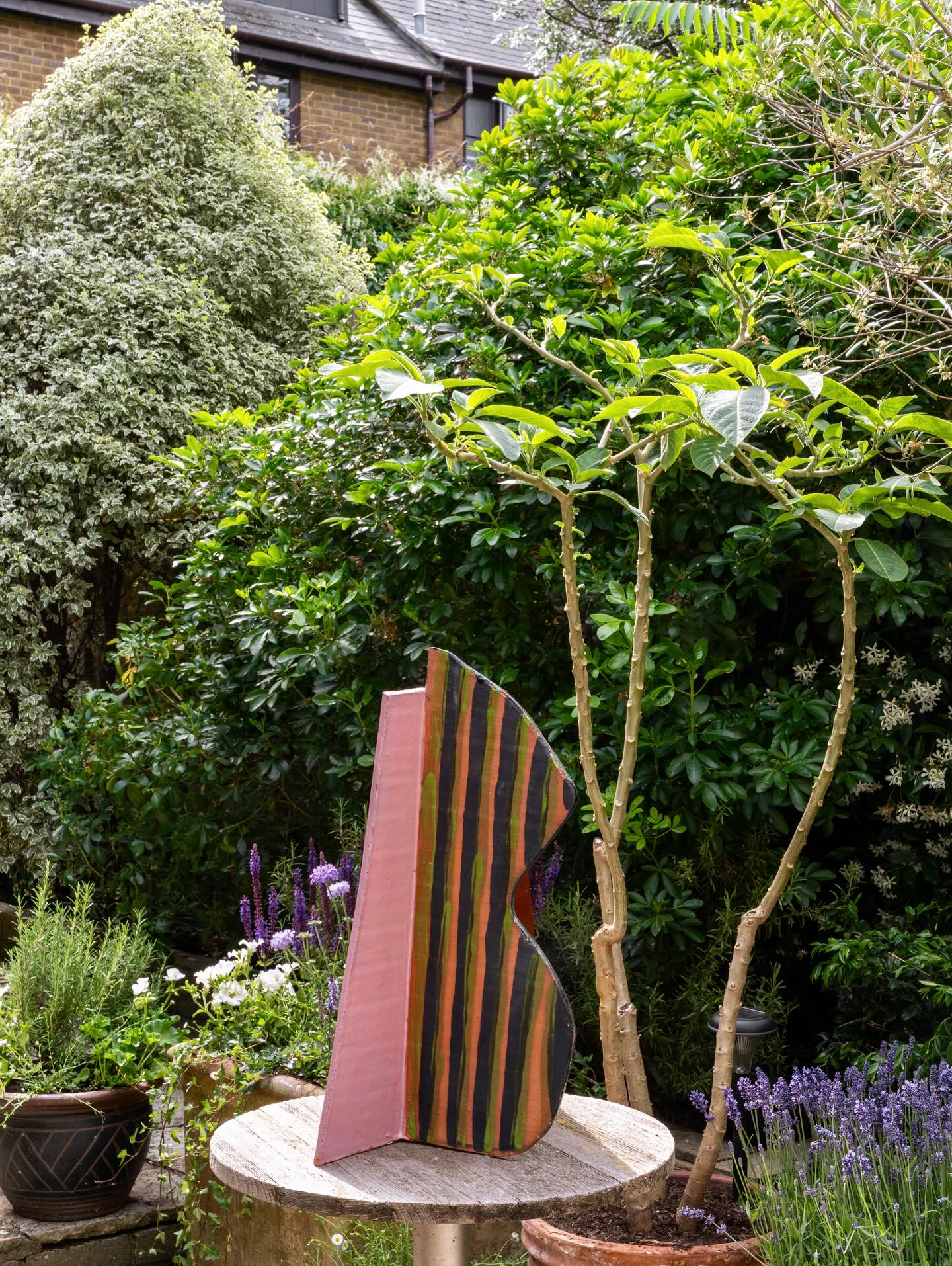
A line stops being the trace of a hand and begins to function as an edge. A mark stops being material and begins to read as light. Art Sokoloff pushes his means to the limit of what is necessary — the point at which a form either convinces, or does not.
For the first time, outdoors, in the garden at Shtager Outdoor, where the artist's programme meets one he did not write: light, wind, shadow.
Text by Olga Klimovitskaya
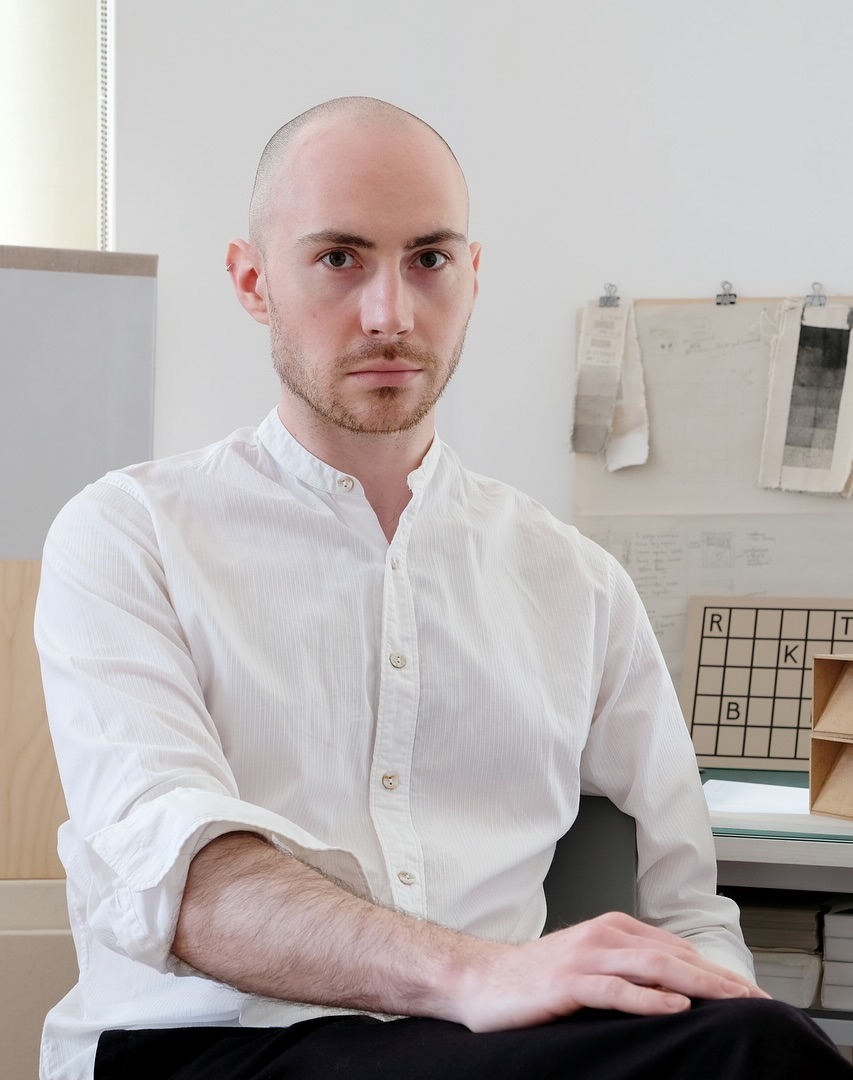
Images: 1. Exhibition Poster 2. Art Sokoloff (Courtesy of the artist) 3. "Midday" MDF, collected dust, glue, transportation crate, screws, shadow, 89x33x25cm, 2026 (Courtesy of the artist)
Mar 12 - Apr 25
Curated by Marina Shtager
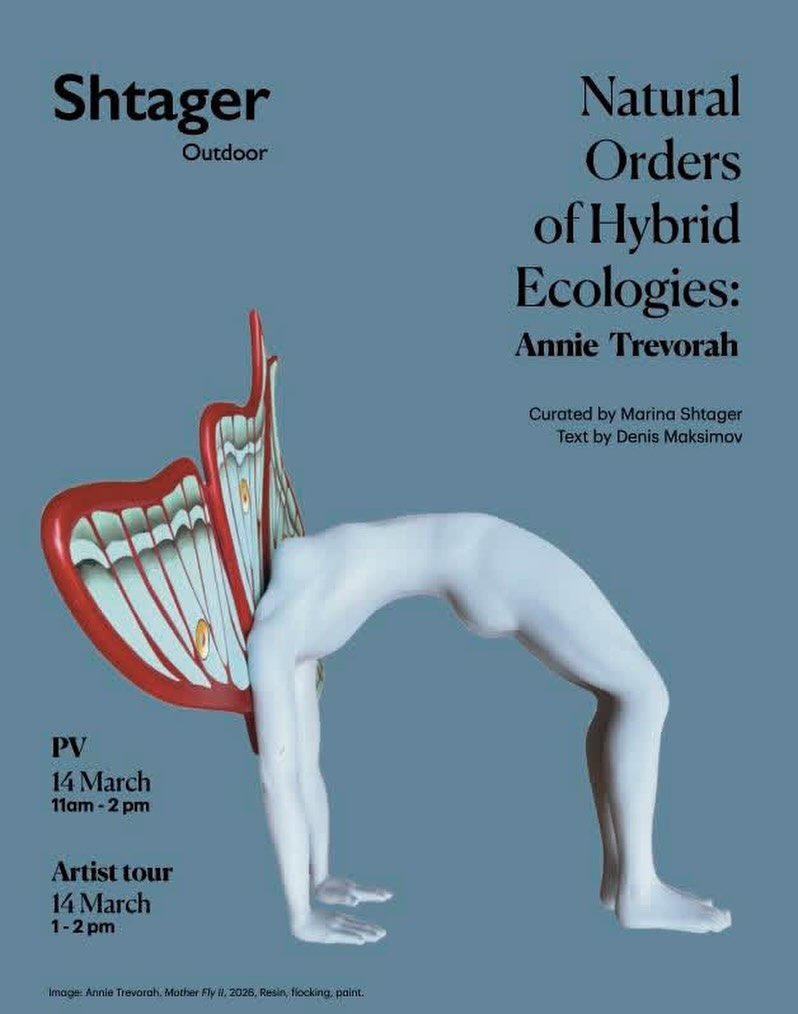
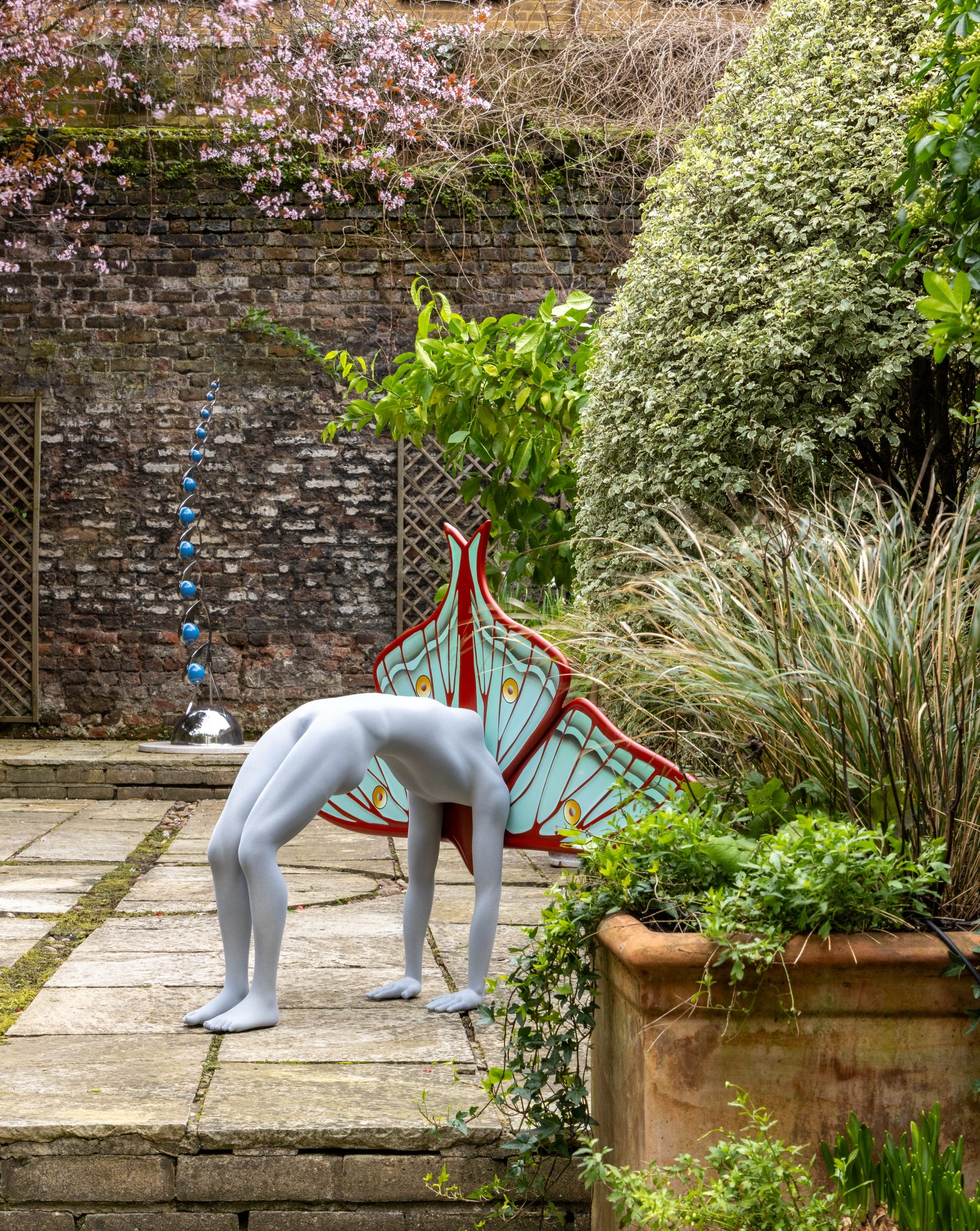
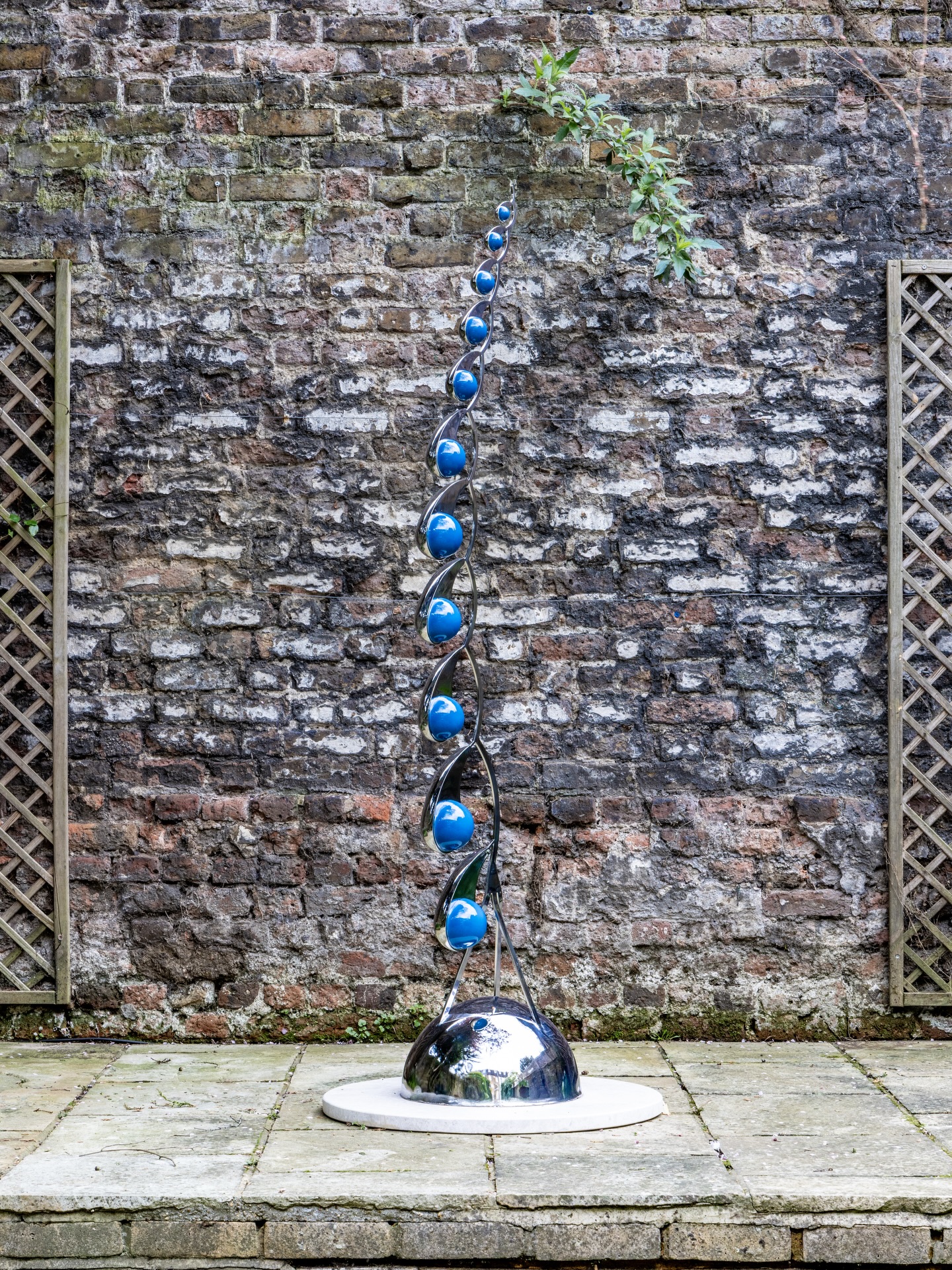
With Natural Orders of Hybrid Ecologies Shtager Outdoor presents a curated selection of new and recent works in a domestic setting, both inside and out. Just as nature evolves and adapts to changing conditions, Annie Trevorah's ambiguous sculptures morph and mutate as they challenge man's dominance over other life forms. The distinction between plant and human blurs as attributes and characteristics merge, natural and synthetic materials become one.
Natural Orders of Hybrid Ecologies introduces a couple of brand new sculptures that highlight the interdependency and vulnerability of species with emphasis shifting from plantlife to animal and the human body.
Images: 1. Poster of Natural Orders of Hybrid Ecologies; 2. Mother Fly II, 2026. Resin, flocking, paint. Photo: Sergey Novikov; 3. FLOW, 2026. Steel, foam, resin, paint. 121 x 45 x 45 cm. Photo: Sergey Novikov
Oct 17 - Nov 25, 2025
Curated by Anna Moss
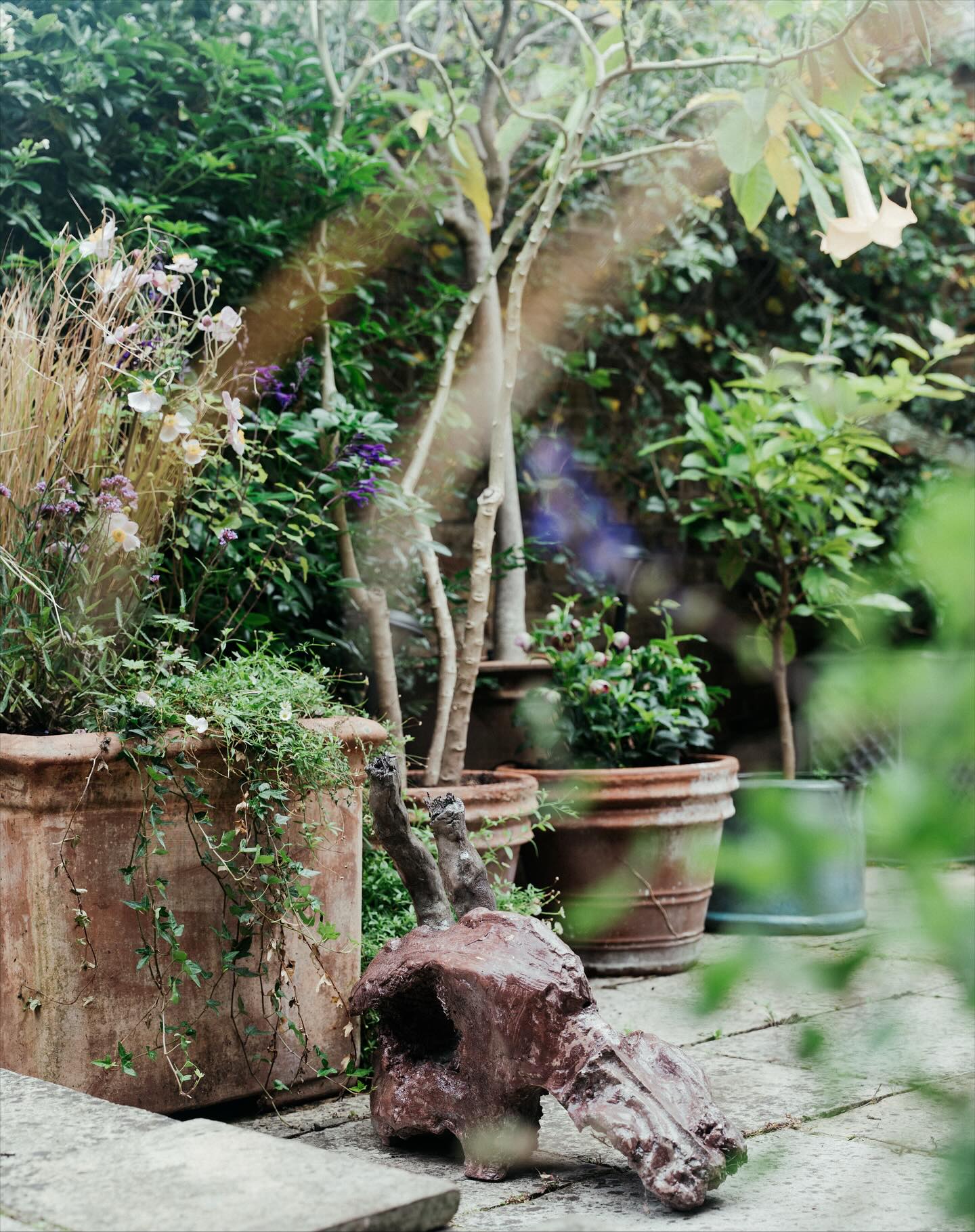
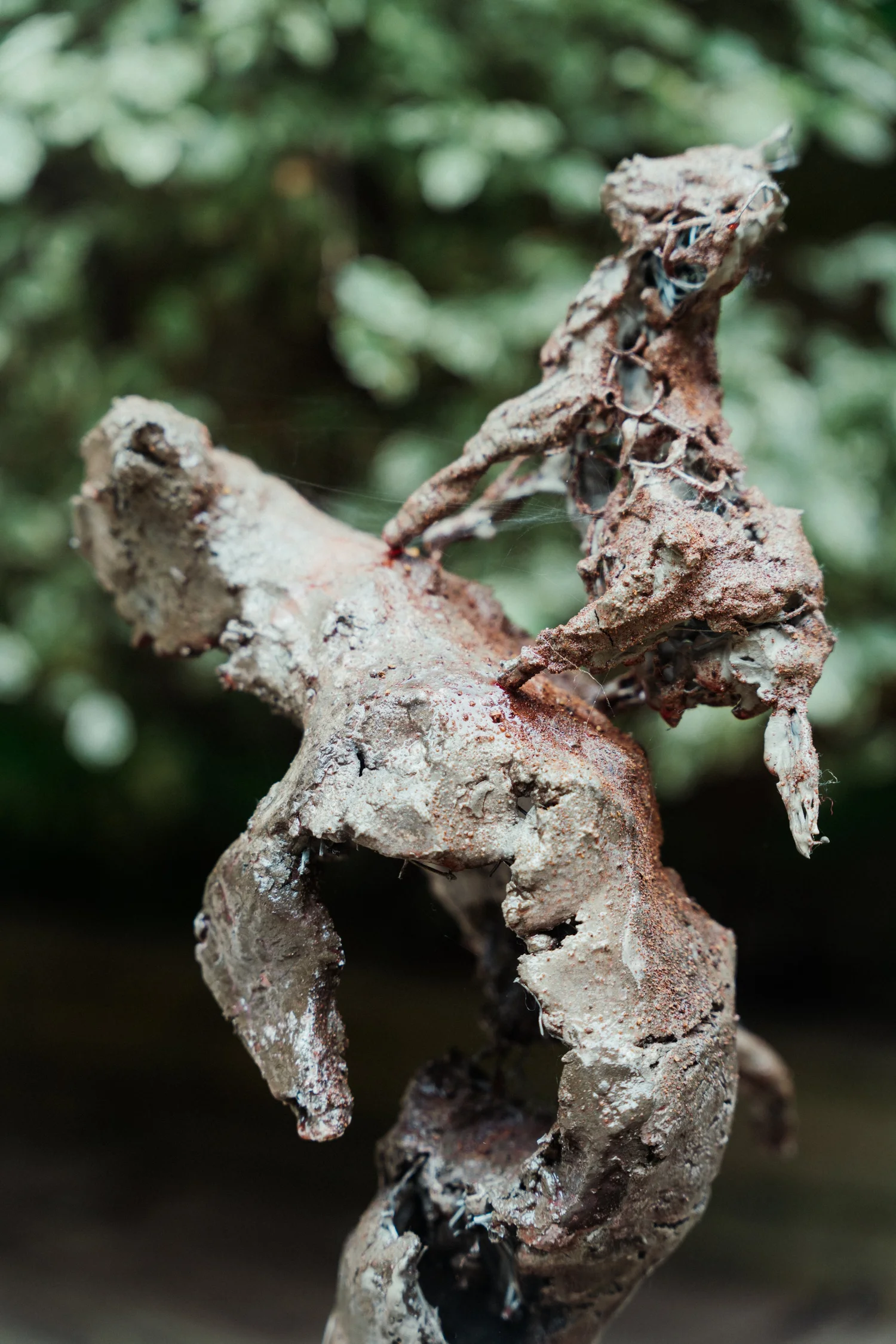
Kirill Basalaev's amorphous sculptures, placed within the private yet urban environment of a London garden, feels like an encounter or happening. We find disembodied limbs, disfigured busts and featureless faces. Sometimes with the body seemingly turned upside down, or on its side, we are unsure if these creatures are mutilated, moving, or coming into being. Seen in situ amongst foliage, they seem to exist independently from a spectator's experience, creating a kind of ritualised atmosphere. Are they in communion with another? What are their relations to each other, both literally and spatially?
The visceral nature of the figures recalls Francis Bacon's contorted forms, or Chaïm Soutine's fleshy, hanging carcasses. Realised in cement rather than paint, it is often through construction material that Basalaev explores traumatic memory, drawing parallels between urban decay and the fragility of human flesh and mind.
Text by Anna Moss
Images: 1. A PART OF NATURE: Install shoot by Sergey Novikov; 2. Bodyresemblance Series, 2024. Cement, filler, epoxy resin, sand, metal wire. Photo: Sergey Novikov; 3. Bodyresemblance Series (detail), 2024. Cement, filler, epoxy resin, sand, metal wire. Photo: Sergey Novikov.
Jun 26 - Sep 10, 2025
Curated by Maria Hinel
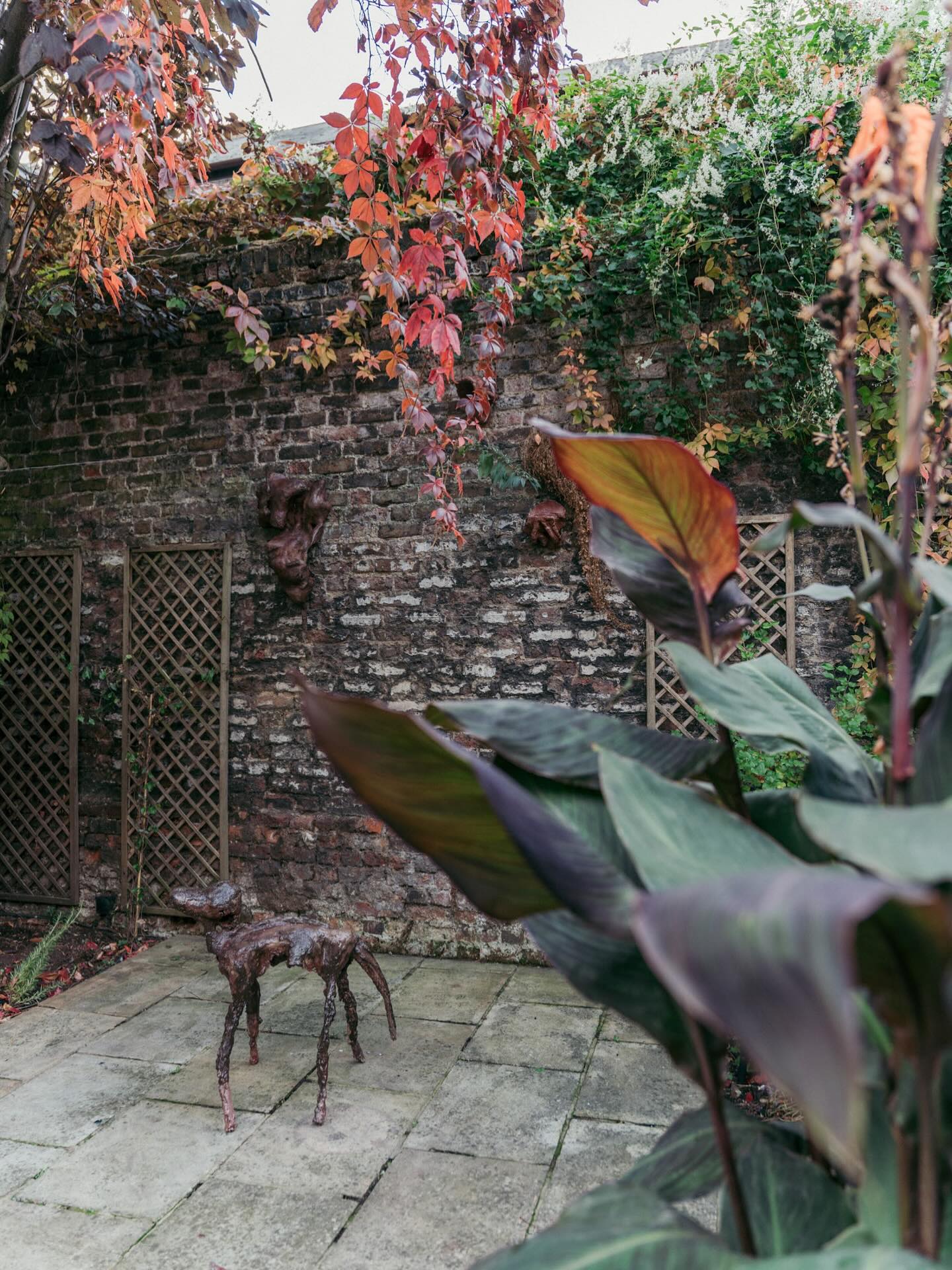
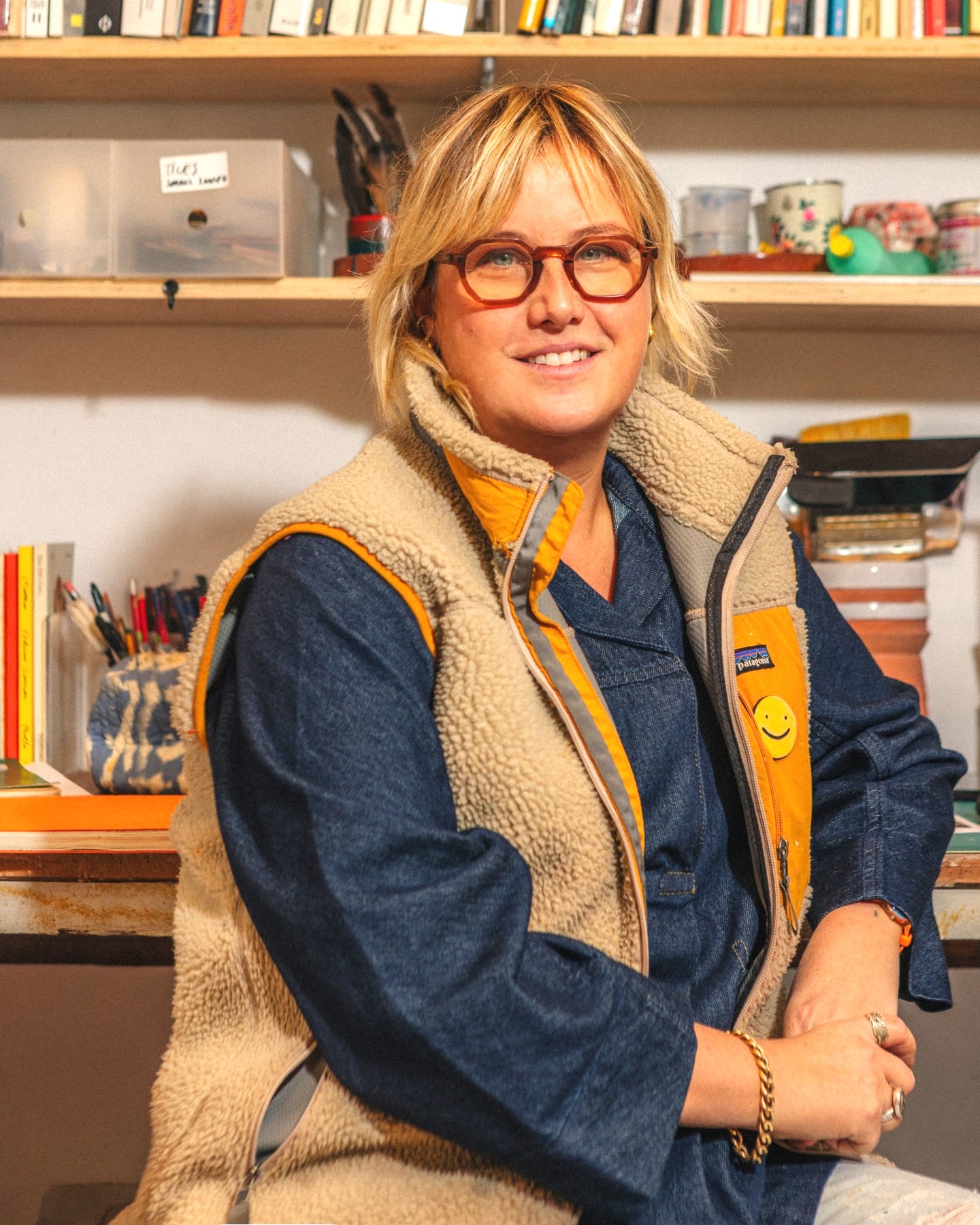
Set in a walled garden among herbs and pollinator-friendly plants, Francesca Anfossi's sculptures in ceramics and wood remind us of the inherent connection of human lives with plants and soil. Constructing a space for gathering – rooted in a shared meal and delight in shapes and scents of the surrounding flora – the works appear manifestly alive.
Titled after common plants, such as Crocus or Euphorbia, Anfossi's clay works morph into humorous, asymmetrical, yet grounded forms, that seem caught in the moment of gradual growth. Pointing to the paths of nutrition and well-being, from clay, to plants, to our table, the sculptures in the exhibition stem from the intersection between observation, environmental awareness and human creativity.
Text by Maria Hinel
Images: 1. Cut Out Table, 2025. Earthenware ceramic. Photo: Sergey Novikov; 2. Francesca Anfossi (Courtesy of the artist).